
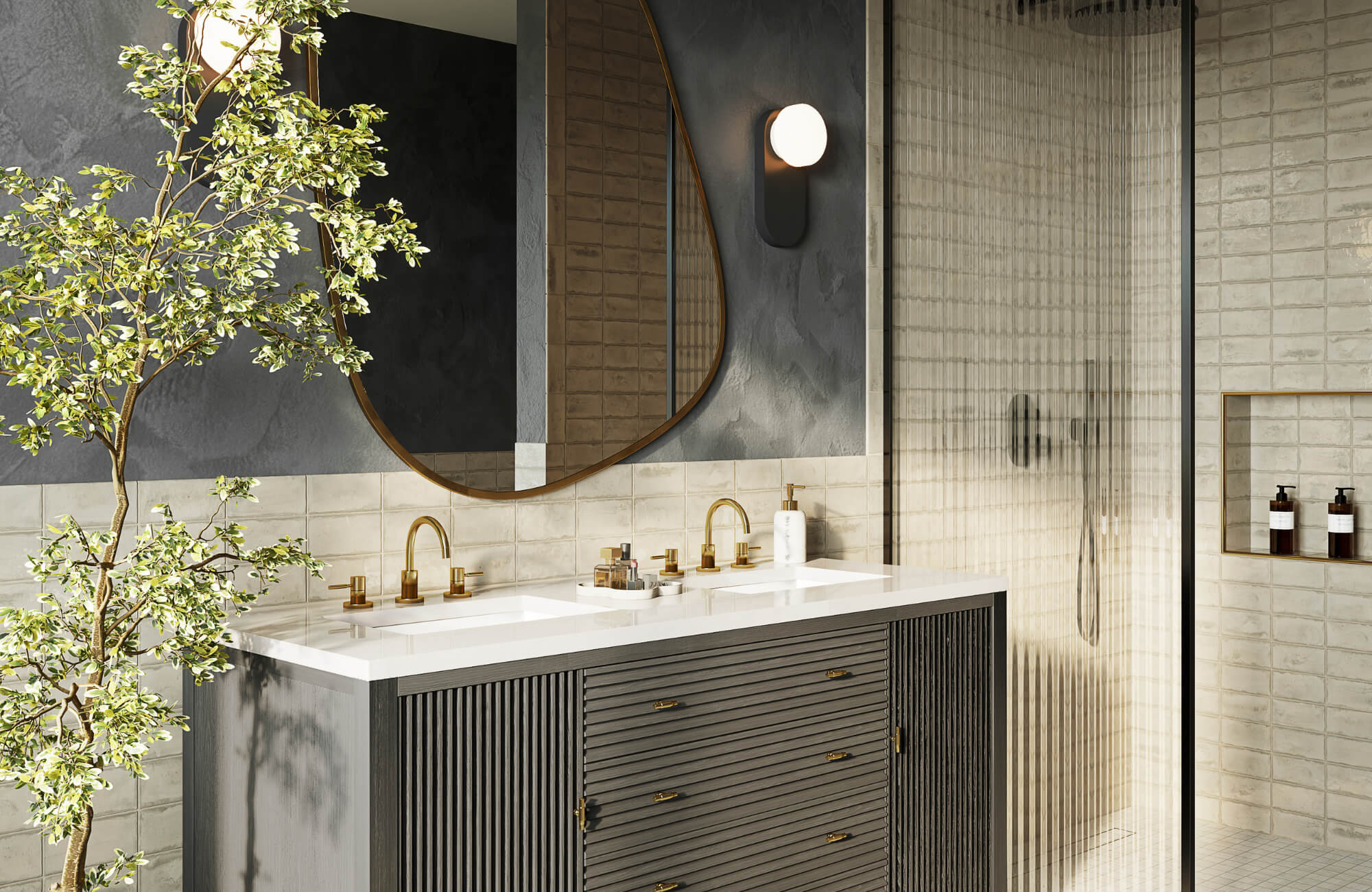
Two people sharing a vanity need more than two sinks. A large 60-inch LED bathroom mirror can give them a continuous viewing surface, but its usefulness depends on where they stand, how the room is lit, and whether both can reach the controls. Start with those daily routines before deciding that a mirror matching the vanity’s stated width is the right choice.
One wide mirror can make the wall feel visually connected. It also asks the household to share a single arrangement of lighting and controls. Planning for that shared space helps prevent small inconveniences from becoming part of every morning.
Check actual dimensions before matching sizes
A vanity sold as 60 inches wide does not tell you everything about the wall above it. The countertop may extend beyond the base, the wall may end at one side, or a window casing may interrupt the available area. Measure the actual counter and the usable wall separately.
The current mirror listing gives dimensions of 60 inches wide by 36 inches high. Place a paper or tape outline of that size on the wall and review it from the doorway. Then stand at each sink to assess the view from the positions that matter most.
A mirror and vanity with equal stated widths can look appropriate in some rooms. In others, leaving more visible wall around the mirror may create a less crowded arrangement. Neither appearance removes the need to follow mounting instructions and check nearby fixtures.
Vertical placement is another separate decision. Account for faucet height, the counter-to-mirror gap, and the viewing needs of shorter and taller users. Do not move the mirror higher simply to make its top line agree with an unrelated cabinet or door frame.
Plan for two people using it together
Sink spacing determines where two users naturally stand. Check whether both have a useful view without moving sideways or leaning toward the middle. A continuous mirror cannot fix sinks that leave too little personal space between them.
Run through an ordinary morning together. One person might be brushing their teeth while the other is shaving or applying makeup. Notice whether elbows, open drawers, or countertop objects make either user step out of their normal position.
Controls can create a quieter source of conflict. Confirm their location and ask whether one person would have to reach across the other’s sink to change a setting. It is also worth discussing whether the two users generally prefer the same brightness.
A quick planning exercise should cover these points:
- Stand at both sinks at the same time.
- Check reflections at each person’s usual distance.
- Test the reach to the proposed control position.
- Open the vanity drawers used most often.
- Reserve separate landing space for daily toiletries.
Treat mirror lighting as one part of the room
A lighted mirror is not automatically a complete bathroom lighting plan. The current product description specifically says this mirror is not intended as the primary light source. Separate room lighting still needs to serve the shower area, circulation space, and other parts of the bathroom.
The listed mirror provides front and back lighting, dimming, and selectable color temperatures. Those functions offer choices, but they do not establish how the finished room will look. Wall colors, daylight, surrounding fixtures, and the user’s position all affect the experience.
Review the lighting with ordinary tasks in mind. A comfortable setting for a quiet morning may be different from the setting someone wants for detailed grooming. If the bathroom has a window, evaluate the arrangement after dark as well as during the day.
Avoid assuming that the brightest setting will always be the most comfortable. Reflections from glossy tile or pale walls may change how the light feels. The goal is a clear view with comfortable room lighting, not simply the highest available output.
Keep storage and installation in the same plan
A wall mirror provides a viewing surface, not enclosed storage. If a medicine cabinet is being removed, decide where its contents will go before approving the replacement. Otherwise, the counter may become the storage area by default.
Sort the existing contents by use. Keep everyday items convenient, move occasional supplies to a suitable location, and follow product labels for storage conditions. This is also a chance to identify anything that should be kept away from children.
Installation needs advance coordination because a wide mirror is awkward to handle. The installer should review the wall construction, approved mounting method, and electrical connection before the mirror arrives. Choose the final position with the cable route and any access needs in mind.
Do not use the paper outline as a drilling guide. The manufacturer’s mounting information and the actual hardware determine the fixing locations. If the electrical arrangement needs changing, have a qualified professional plan that work before the wall is finished.
Choose for the shared routine
A large 60-inch LED bathroom mirror works best when the household agrees on how the space should function. Both users should have a clear view, comfortable access to their sinks, and a practical place for their belongings. Those everyday checks are more useful than judging the mirror from an empty-room photograph alone.
Before ordering, keep a short record of the actual wall measurements, the preferred mounting height, and the questions still open for the installer. Check the current mirror specifications at Allsumhome against that record, then make the choice around the people who will use it. A successful shared vanity is one that remains comfortable when both sinks are busy.


More Stories
Marketplace Link Building With Visible Pricing for Home and Real Estate Businesses
How to Evaluate Information on the Internet
Revamping Your Culinary Heart: A Modern Kitchen Renovation Journey